Thursday, June 23, 2011

Just As the rainy season gets going, so does our work...

We did our first HIV-AIDS charla of our service last week in a nearby town with two other volunteers. The prevention of HIV-AIDS is a worldwide Peace Corps initiative, and as such, everyone, regardless of project, gets trained in how to give a fun but basic charla to adolescents about contraction, prevention, abstinence, condom usage etc. No one, except maybe the health PCV’s, was too enthralled with the idea during training when we had one day to prepare and give the charla in our broken Spanish to unruly and awkward 6th graders. We weren’t really planning on doing any more after that, but a few months ago I attended a workshop about gender equity issues, a component of which was educating women about reproductive rights/health and HIV-AIDS prevention. I figured that this was something that we as PCV’s could actually do something about (as opposed to say wage equity) and set out to implement the charla.

Luckily for us, we have the wonderful school where we teach that will pretty much let us do anything we propose. They happily agreed to let us do 5 charlas with all their 7th and 8th grade classes. So we put together the materials and did the first one. All things considered it went pretty well. We do dinamicas and games to teach vocabulary, methods of transmission, how the diseases work, and methods of prevention. The kids laugh a lot, which makes it less awkward. Some of the kids seemed like they had heard the information before, one guy even offered to sing us a song he had learned on the topic – truly heartwarming. The best (?) part is always the condom on banana demonstration where the kids complain about how gross it is etc, although some kids seemed like old-pros (good and bad simultaneously). We left the four hour charla sweaty and exhausted, but satisfied after we saw our pre and post test results that showed some significant improvements in knowledge. The other 4 are coming up in July.


We’re still going strong on the World Map as the kids draw more and more of the countries. We were a little skeptical at first that they were really getting the hang of the grid by grid transfer system, but after we told them to take their time, the kids are putting in a lot of effort to make everything detailed and it’s coming out great. We still have Asia and Europe left – saved the most difficult for last of course – then on to the painting! This ends up taking up most of our Thursdays and Saturdays by the time we go there, draw, fix some of their more egregious mistakes, then walk back after a stop at our favorite baleada place. I’m trying to figure out if a geography bee would be a worthwhile activity when we finish or a catastrophe….thoughts?


We have also had an Engineers Without Borders (EWB) group here since last Sunday working with a small shantytown-like community of 75 families on the edge of the city. The community does not have electricity or a plumbing/sewer system, and many of the houses are simply wood boards. The EWB previously helped install a potable water system and made a commitment to serving 5 years with the community, so came this year to investigate how the current system was working and what other projects they could start. Nolan and a fellow PCV are helping with this, translating, setting them up with organizations and people here in town, acting as a liaison, etc. The group, which is three people, is only here for a week though so in order to get all the surveys and work done that they want, they’ve been going out to the community (on foot, half an hour) at 5:30 am and coming back at 6:30 at night. Needless to say Nolan is thoroughly exhausted, but the results they are seeing in the community are uplifting. The water board (which is in charge of water management) is running smoothly and efficiently, charging water tariffs and even imposing fines on families not abiding by the water usage rules (which is very uncommon here). The president of the board is a smart woman and a good leader. EWB is looking at putting in a rainwater/grey water runoff system as their next project.

I meanwhile was out of town Monday to Wednesday in Siguatepeque where I gave a two day workshop on how to start and run a business to 13 women and 1 man who are involved with the Oficinas de La Mujer (women’s offices) in their municipalities. My wat/san friend from Siguat had called asking me to help since she knew nothing about the topic, and the organizing group agreed to pay all my expenses so it seemed like a great opportunity. I condensed a 24 week course my fellow BZ friend had designed into an 8 hour, 2 day workshop, covering everything from brainstorming to find an initial idea, to how to elaborate a full business plan and go through the legal steps to get started. I also offered some resources and tips based on my experiences with my current women’s group. The goal was to transfer the knowledge to the women so they could transfer it to individual women and women’s groups in their respective communities.

I wasn’t really used to presenting to the kind of women that were at this workshop. I normally give presentations in rural communities on big pieces of paper in people’s houses that have no light to women who are so shy and timid, they barely spit out three words the whole time (which I do love). This time I had a data show (projector) and laptop in a private conference room with middle to upper class, nicely dressed, outgoing women. Some of them even seemed to know more about the topics that I did, which was great and intimidating at the same time. All in all, it was a great workshop that I felt really proud of finishing, but I left Siguat feeling drained.

I of course had to rush back in time for this week’s world map session and another presentation for Amigos de Las Americas. Amigos is a program that sends high school students for 7 weeks to countries all over the Americas to help with short term community development projects. It just so happens that our department is one of their favorite places to send people, so we were called by the coordinator to see if we had time to speak to the newly arrived kids about our experiences, thoughts and advice. We thought it was a great opportunity and wanted to meet the kids so we happily agreed. We chatted with them for about an hour about local customs, history, culture and the Peace Corps – they all looked so young!

Now we’re back at home and the power is out for the second time this week (which means bucket baths) and the last thunder bolt we heard shook the whole house. Time for bed!

Wednesday, June 15, 2011

Yes Sir Señor Presidente Sir

I was teaching my math class last week when phone rang. It was my boss at Peace Corps, but as usual while I’m in class, I simply put my phone on silent and continued teaching. I figured he’d call back later in the day. He didn’t. But an hour later, this time in the middle of supervising the students drawing the world map, my phone rang again. This time is was Emily, our country director. Nicki was also helping with the map, so I was able to answer it this time. I picked up and was told that there was a special event going on in an aldea of Yamaranguila (a nearby town) the next day. USAID had recently completed installing solar panels on 53 houses and building a water system for the community, and there was going to be an inauguration for the projects. Nicki and I, as well as the new couple in Yamaranguila, had been invited to attend, as usual at the last minute. Under normal circumstances, this would be exciting enough. Even though we had nothing to do with the project, it always fun to attend inaugurations, you get a free lunch at the very least.

But these weren’t normal circumstances. This was a project that USAID was proud of and wanted to show off, and because of that, the US Ambassador, Hugo Llorens, was going to be there. And he wasn’t the only big name attending. El Señor Presidente, Porfirio ‘Pepe’ Lobo (President of Honduras) was going to be there! Needless to say, we were pretty excited and quickly arranged to cancel all our plans for the following day so that we could attend. We confirmed with Emily and USAID and were given instructions about when and where to meet in the morning.

After a restless night worrying about what to wear and what to say to the most important figure in Honduras, we woke up extra early. Nicki’s project director had coincidentally planned a site visit for the same day so we met with him for breakfast and interviews with our host family and her counterparts. He decided to join us for the event and so we contacted USAID and met up with them at the entrance to town to wait for the Ambassador and Honduran Director of USAID who were about to arrive. We waited and waited, then got a call from the USAID coordinator, ’10 minutes until arrival’ she told us and hung up. A few minutes later she called again, “3 minutes.” Our anticipation brewing like in a secret agent movie, we soon saw a police truck speeding up the road toward us, two black suburbans following closely. The USAID people pulled out quickly behind them and we followed in the Peace Corps car, completing the 5 car motorcade. With lights flashing, our caravan sped through town so quick we almost lost them. My project director made a quick one block jaunt and we were back in the motorcade. Cops held up traffic at the corners and the police truck in front motioned for cars to move so we could press on through town and out into the aldeas of Yamaranguila.

The road from La Esperanza to Yamaranguila is infamously horrible, especially this time of year, but that didn’t seem to stop us from speeding 60 mph down the rock strewn and washed out highway, dodging potholes with a jerk of the wheel like in a video game. Bystanders on the side of the road gave us strange looks as our motorcade passed, whipping up dust for miles. In no time we arrived at the highest point of a mountain in the heart of the community of El Pelon. We were ushered to meet the USAID director (a former PCV himself) and the Ambassador, both very friendly, then to a small house where Pepe Lobo was meeting a family. Packed into the tiny dwelling, we could hardly see the president, a rather short and squat man, amidst throngs of reporters. He spoke to the family about their first lights and access outside their door to potable water. “How many years have you lived in darkness?” someone asked, sounding more like a preacher than a reporter. “All my life,” the homeowner replied.

President (center) with Ambassador (cap) and USAID Director (white hair) posing for a shot in front of a solar panel-laden home

The crowds cleared and the president approached us, this was our moment. We shook hands, introduced ourselves, said where we lived and what we did. He smiled, shook back and thanked us. In was all very quick. We were struck by two things, his clothing and lack of security. Whereas we had brought out our Sunday best, tie included, here the President stood before us in jeans, boots and button up plaid shirt, looking somewhat cowboy-like in his stance and demeanor. The president did have what looked like two soldiers following him around, but for the most part they kept a reasonable distance, and people were free to come up to him and speak or hand in the occasional proposal for funding for a new project.

Crowd awaiting the speeches

Solar powered street lamp for this town of 50 houses

We spent the next hour following the president from house to house to view the new solar panels. In between houses, he spent his time on age-old political activities such as patting dirty kids on the head, picking up tiny babies, shaking hands with aging campesinos, and posing for the press in various combinations of these. The event did eventually start, and we were treated to 5 or 6 speeches, all going over time. The best part of the actual inauguration was the community participation. A group of high schools kids performed a folk dance, complete with traditional Lenca clothing. A community group also put on a hilarious skit of how their lives have changed with the advent of solar panels and water system.

Pepe cuddling with babies...

...and shaking hands with the kids

The mesa principal and hours of speeches

Lenca folk dancing

The ambassador had our backs, and after the event he brought the president over to take a picture with us. Unfortunately, the guy taking the picture cut Nicki out of it. We are currently waiting to hear from the USAID director, who was also taking pictures, to see if he has another shot with Nicki. We will post that for all to see when we get it, though we assure you all that Nicki was indeed there.

Not long after the president and ambassador took off in their private helicopter, the rain clouds closed in and we sped away in a Suburban along quickly deteriorating dirt roads pondering the next time we might be able to meet a head of state.

Photo with the president and ambassador sans Nicki (she was to the ambassador's left)

Sunday, June 5, 2011

Random and Interesting Tales from La Esperanza

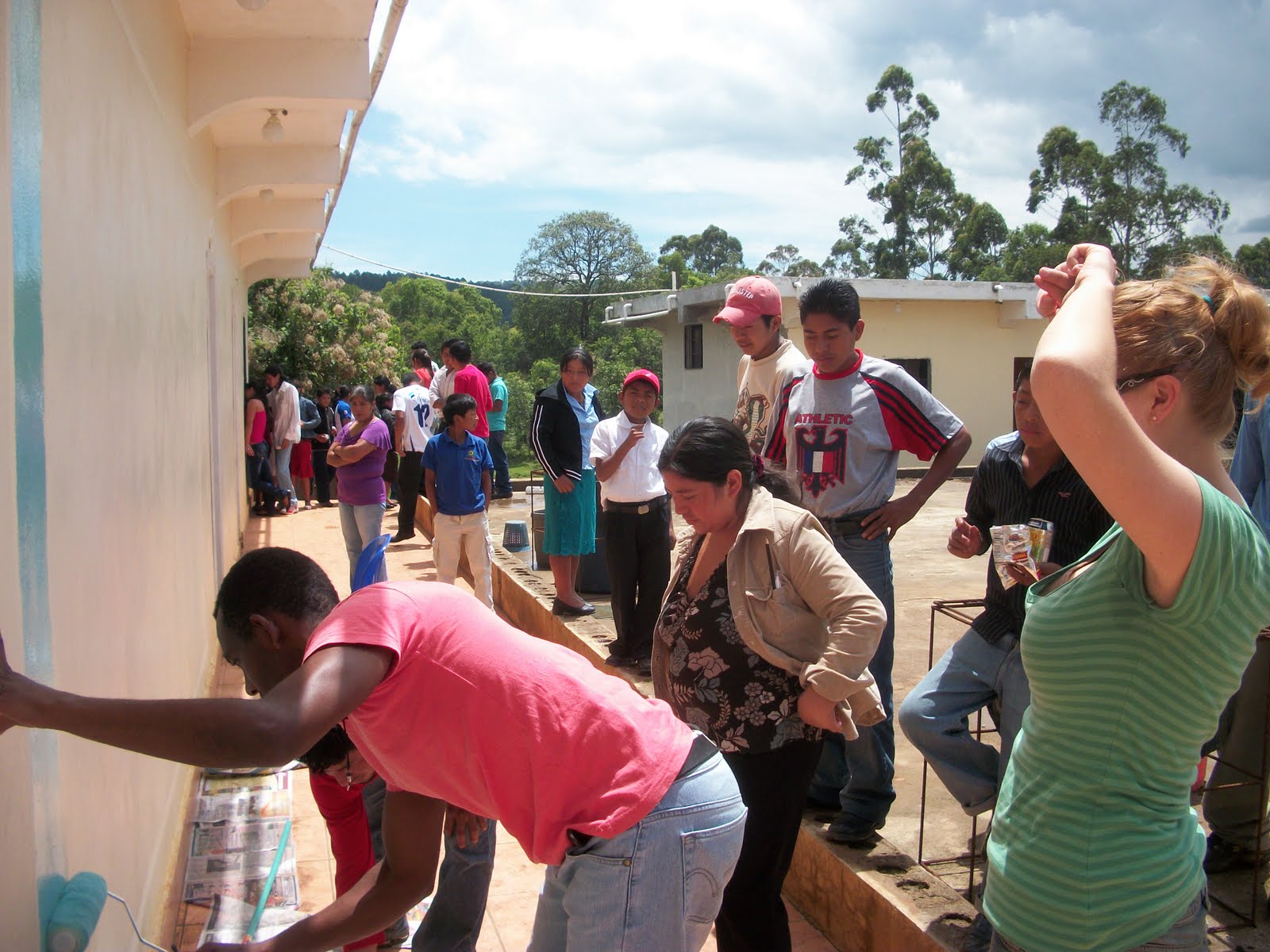
World Map - Nolan and I started our World Map project finally last week. The World Map is a Peace Corps wide initiative where PCV’s help a community group, i.e. a library, school, whatever, draw and paint a huge world map (usually about 7 by 14 feet) on an available wall or floor. In addition to being a great project to get students engaged and active in artistic endeavors, it also helps teach geography and world awareness and is luckily pretty permanent. I’m a huge geography fan so I’ve been dying to do this project since I heard about it. We were able to get some money donated from a class of students at Nolan’s mom’s school (Thanks Pam!) to buy the materials which finally arrived after two months thanks to either the Honduran mail service or the Peace Corps mail sorters. It turns out $50 is all it takes to create the map from start to finish. So we started last Saturday with the base coat of blue for the oceans and I was a little skeptical that the 8th grade classes we’re working with at Maestro en Casa (same place we teach chemistry and math) would know what they were doing. I was pleasantly surprised with the outcome.

The “kids” the first day ended up being two guys in their early 20’s and a woman who was at least 30, possibly older (it’s really hard to tell here). They jumped right in and looked like pro painters with excellent technique, except one thing. We’re using oil-based paint because we’re painting outside which you often thin with mineral spirits a little (usually to make it go into a spray painter easier), but people here seem to think it’s best to use equal parts paint and thinner! We made the mistake of letting the kids mix the paint themselves and we ended up with a water-like liquid that was dripping down the wall faster than they could roll it. We thought this was a problem, but no one else really did. Not to mention it was windy that day so the wind was blowing specs of the water-paint all over the ground, wall, door and kids! We got the first coat on okay, but decided we’re taking over the mixing for the next coat. (The second coat with much less thinner went on much better) Whether it’s for cost-effectiveness or just lack of understanding of paint viscosity, we realized that this technique of over-thinning is ubiquitous here, such as in our own house where the paint washes off with a wet rag! They probably were able to use just one gallon of paint to do our whole house!

Day 1: Rolling the first coat

Day 1: You can see the paint getting all over the ground

Our makeshift rain cover

Day 2: Second coat, we devised a better floor covering

Piropos – Piropos are a pretty common thing here, guys yelling “I love you, baby” and the like. I mostly find it pretty hilarious and try not to laugh outright in people’s faces when they say things to me. But I’ve had some really funny not-quite-piropo occurrences too. A few months ago, Nolan and I were walking in the market and some guy yelled at us “What’s up with Wikileaks?!” This was funny for two reasons 1) Does this guy really know anything about Wikileaks? and 2) Why would you yell that at someone randomly? A conversation starter? I also get a lot of people yelling at me random English – not even inappropriate things, just a ‘how are you?” or “where are you going?” but always from men, as if they think it’s a piropo or something. But a few weeks ago I actually had a woman in the market yell at me “HOW ARE YOU!?” which in their accent is like “howr jew?” I was shocked that a woman had done it for one, secondly, do people really think that is an appropriate way to communicate? Sometimes I just don’t get it.

Cookies - I enjoy cooking and often bake things for the women at work. I made some peanut butter cookies a few weeks ago and took them in. I asked my counterpart the next day what she thought. They were so good, she said, it was like they were made in a factory! Quite a compliment, tastes just like they were churned out by underpaid impoverished maquiladora workers using nothing but processed ingredients and preservatives, yum! I guess that’s a compliment here since things made in people’s home ovens are pretty sub-par. My cookies were so amazing that one member women’s group of our organization has now requested that I teach them new recipes for their bakery so this coming Tuesday I’m doing a half day cooking demonstration of peanut butter cookies, zucchini bread and Devil’s food cake. I guess their rock hard corn based coffee dunkers are just not drawing too many new customers these days.

Religion - The women’s cooperative I primarily work with UMMIL (now on Facebook, check it out!) has monthly meetings, a general assembly they call it, to talk about important issues etc. It’s become a trend in the past few months that our president invites a few women from this religious sisterhood to come share testimonies of their discovery of Jesus in their lives as the opening to our meeting. Now, proselytizing is a pretty common act here. Aside from random people who strike up a conversation then try to convert you (this happened to me once, a guy sitting next to me on the bus conveniently), we also have people who come aboard our cross country buses to speak the word to you when you have no place to hide, bus preachers. It’s like your Sunday gospel brought straight to you. I guess you could say you get used to being bombarded with this stuff. I don’t object to faith or religion or people sharing their beliefs. I actually think it’s pretty great that people can use it to turn their life around. The woman this week at our women’s group meeting shared how she had been a drug dealer and gone to prison for 8 years before she found Jesus – more power to her for having the strength to clean her life up and share her story. The part of the whole thing that made me a little uncomfortable was when she invited everyone else to pray with her then proceed to come around and touch everyone (including me), not inappropriately, just on the shoulder and head. I have no problem listening, but please don’t touch me.

Nighttime Noises – So in addition to the cats and birds we have chasing each other on our tin roof making all kinds of scratching sounds, we have three other famous nighttime serenades. The first is what I like to call our barking chain, you know like from 101 Dalmations where Pongo puts out the message about his missing puppies. First one dog starts, then all the others in a 10 block radius chime in, howling, yelping and barking for up to 10 minutes at least once nightly. Our neighbors two houses down have geese who join in with some squawking and we get an occasional cat meow that sounds to me like a dying child. It’s like living in a zoo sometimes. Then we have the trucks and motos. Our street is something of a major thoroughfare here in town (hah!) so we get all kinds of rackety delivery trucks, pickups and buses at all hours of the night traversing past our bedroom window. We have some motorcyclists who like to speed around risking their lives on these potholed roads who I swear have never heard of a muffler. Then recently we started getting someone (I’m pretty sure it’s the same person every day) who needs to run their truck down a hill to get it to start and what do we have but a perfect hill. So it’s a squeaking truck that we hear coming down the hill like a bicycle that all the sudden throws itself into gear and slams on the gas to speed away – astonishingly noisy. And last but not least our newest visitor, a bolo (drunk) who has taken to sleeping under our balcony on the sidewalk and last night was snoring so loudly that first I thought it was Nolan next to me, which I quickly discovered it wasn’t. I was appalled at this bolo’s decibel level and couldn’t get to sleep for the life of me. Such is our nighttime serenade.

Sunday, May 29, 2011

Renewable Energy Workshop

The Peace Corps has recently created a Renewable Energy and Climate Change Initiative in order to increase awareness and knowledge of climate change as well as provide financing options for renewable energy systems. As part of this initiative, I attended a Renewable Energy Workshop last week with my counterpart from the municipality.

The purpose of the workshop was to introduce us to three forms of renewable energy: biodigestors, solar panels, and microhydroelectric systems, as well as financing options available in Honduras. The workshop was interesting, although I think most of the participants would have preferred more in depth information.

Everyone who attended the workshop

We talked about how each system is used, and what the ideal situations are. A biodigestor is basically a long plastic bag that is half buried in which you put organic matter (usually manure) to decompose and produce methane. The bag traps the methane which is piped away to use as cooking gas. As a bonus, after the methane is taken out, the organic matter coming out the other side of the bag is more usable as compost. Biodigestors can be used with any type of organic matter, although it works best with manure, so it’s best suited for people with livestock. The trouble is people with livestock tend to be better off and don’t necessarily need help. We went and saw a Chinese style biodigestor (which uses a concrete tank instead of a plastic bag), but the family had stopped using it a couple years ago when the municipal electricity had been extended to them (they had been using the gas for gas lamps).

Tank of Chinese style biodigestor

Everyone is at least somewhat familiar with solar panels, so we spent most of the time talking about different pre set systems that are available with some government subsidies. The systems range from 35 to 85 watts, which as a household limit is hardly anything compared to the average U.S. person’s usage around 1500 watts. The price (between L. 15,000 and 20,000) includes installation and with a system like this, with one solar panel, a household could have up 6 lightbulbs, a radio, a tv (bw or color depending on wattage), and a couple cell phone chargers. Of course, you can’t run all those things at once, and only for a few hours a day, but it’s still a monumental change in lifestyle.

Solar hot water heater made of 2 L coke bottles

A microhydroelectrical system is considered any system of less than 5 kW. Because it can be so much larger, they are usually installed as a community electrical system. Microhydro systems require much more technical knowledge to design, but we visited a 500W-one-house system that was built by the community without technical knowledge or a design. The problems were evident to all the engineers in the group, but that isn’t keeping it from working and providing plenty of electricity to the owner.

Learning how to measure the topography with a plastic hose

She hadn't been using the turbine because the flow is extra high right now due to the rain

500W of power

Electrical controls inside the house

Solar panels are the only system type that has an organized government subsidy program, but I did learn from my counterpart about several other projects around La Esperanza that I hope to learn more about soon and help with if possible. A few years ago, there had been plans to build a microhydro system. La Esperanza sits in an ideal location in the country with plenty of water and mountains for a good drop. Unfortunately, the project fell through and was never built. Part of our city is connected to a waste water treatment plant, and there is a study going on currently to see about methane levels and the possibility of capturing them to use. There is also at least one municipal funded solar project going on.

The workshop was held in the Zamorano Agricultural University in the east of the country. The University was founded in 1941 by the president of the United Fruit Company, and is now possibly the best university in Honduras, and well-known throughout Central America. The students generally study agricultural engineering and learn all about the latest agricultural methods, especially organic methods. The best part for us visitors is that there is a small grocery store on campus that sells all the products that the students produce. I was able to buy a couple bags of fresh organic basil (basil being virtually unknown in Honduras) which is obviously essential to Nicki and my Italian cooking habits. As soon as I got home, we made a batch of pesto, something we haven’t had in over a year.

Kellogg center of Zamorano

It was great to see what Honduras is doing to combat climate change and promote renewable energy, and I ended up with an extra basil bonus.

Saturday, May 7, 2011

Las Alfombras de Comayagua

During Semana Santa (Easter week), several cities in Honduras construct alfombras, rugs made of colored sawdust running along the streets towards the main church. Comayagua, the former capital of Honduras is supposed to have the best, so we headed there to see for ourselves. The first day we spent walking around the city, seeing the cathedral, bell tower, and archeological museum. On Good Friday, we woke up early to see the alfombras being made (they supposedly start at 2am, but we started watching at 7), before seeing the procession shuffle across them on their way to the cathedral. Below are some pictures from the trip:

Cathedral

Up in the bell tower

Original clock from the bell tower and oldest in the Americas, made by the moors in Spain and gifted to Comayagua by the king of Spain

Nolan with an old president of Honduras

Laying of the sawdust

Stencils help with intricate designs

Unusual raised relief design of Jesus

Using pesticide sprayers to keep the alfombras wet so they don't crumble and blow away

By a completed alfombra

Several had ladders set up so you could have a better view from above

Non-traditional shape

Each alfombra was made by a different group, ranging from high school classes to the police

Several depicted the pope

The start of the procession

It's kind of scary to see a large group of men walking down the street with pointy hooded robes

The procession shuffles side to side to make sure they destroy the entire design

The kids seem to like collecting the sawdust afterward, filling several coke bottles apiece

Monday, April 25, 2011

Work and Woes

I feel like we haven’t made too many work posts so I thought I’d write about some of the good and not-so-good things going on.

I think around the one-year mark, you sometimes get into a little slump. In February, we started saying we’d been here for one year, which was true, but that meant really only 9 months in site. Then we just kept saying one year, one year, even now when it’s still not one full year that we’ve been in our actual site. It was like a countdown that wasn’t counting down, a little depressing, like time wasn’t moving. I think around now you start reflecting, thinking that you’re halfway done, wondering if you’ve achieved anything so far, thinking now you only have one year left and what you can accomplish in that time. The group before us is also heading out so people close to us are leaving. I, for one, started questioning if I’d had any positive effect on my women’s cooperative. I still haven’t even visited every individual women’s group in the organization, let along done anything to help most of them. Sales at the store seem about the same. Plus, we hadn’t had a board meeting in months because every time we scheduled one, no one would show up. I also had planned a bunch of teambuilding charlas with the groups, half of which fell through.

While February and March seemed busy, I can’t quite put my finger on why. We did have two week-long medical brigades which take up all your time. I finished up my Chemistry class and started an English class. For me at least, having regularly scheduled classes keeps me going. Even though at times half the students might not show up, you know that it’s something planned every week that you have to prepare for. It’s also improved my Spanish (and Nolan’s) a great deal. I’m looking forward to starting another chemistry class in a few months.

Things seemed to be picking up again after a visit from the new class of trainees. We had one wat/san and one business volunteer come to visit us as part of their training so they could shadow us for a few days. We showed them around town, took them to work with us and fed them the best baleadas in Honduras. It was nice to have some company and meet new people, and also to chat with them and share some of the wisdom we’ve gained in this past year.

Hearing some of their starry-eyed ideas and goals made me feel more positive and invigorated to get going with some new ideas in my own work. My women’s group had a meeting two weeks ago where they finally, FINALLY!, decided to elect a new member of the board to replace a woman who hadn’t participated in the organization in almost a year, but had never officially left. The group as a whole decided to replace the woman, and I pushed for an immediate vote of a new member which turned out awesome, as they elected a smart, well-informed and level-headed new woman to the board. We also had a discussion about loans, interest and artesania sales at the store. One women’s group that had taken out a loan was petitioning to not pay interest based on the fact that they sold products to the store and thought that would garner them favorable treatment. Normally not that vocal at meetings, I had to chime in on this one, explaining that the store and it’s sales was completely separate from the loan part of the organization and that everyone had to pay interest in order to 1) be fair and 2) grow the loan fund for future funding! I was afraid I’d be shot down, but several members of the assembly immediately voiced their agreement with me and backed my logic. It was like they wanted to say that themselves, but were too shy until I said it. It was a big step forward in getting them to realize the importance of keeping the two parts of the business separate and in reinforcing the importance of paying interest, which has been a continual problem. The women also decided to keep going with the chip bag purses we started months ago and we planned a few dates to do more training sessions. We also planned two more organizational management charlas for this coming week. Through talking with a supermarket manager, we came up with the idea to make advertisement flyers for one group that sells roses to distribute to store owners, banks and hotels. I’m hoping it will work out that people can call to make orders to the group in advance then pick them up at our artisan store in town. I’m also trying to get the group going on making a website and we’re in the initial phase of deciding what the website will contain. Things are looking up!

On a separate note, Nolan and I are starting a world map project at the school where we teach. The idea is to have the 8th graders draw and paint a 7x14 ft world map on the wall in their school courtyard, partly for their art credit and partly to help teach them about geography. I love love love maps so I’m really excited about this project. Nolan’s mom’s school in Michigan was able to raise money to donate to the project for paint and supplies so we’re hoping it’s going to be a great connection between the two classes. I just pitched the idea to the kids here a few weeks ago and they seemed interested. We hope to start painting the background as soon as we get the money in the mail. I also got roped into organizing an international potluck dinner event bringing together all the foreign workers in town and some key Honduran citizens to form an advisory committee for the school. Since the director of the school is not here at the moment, I get to be in charge of a powerpoint presentation explaining the school’s history, projects and future goals at the event, basically the main speaker, sort of ridiculous, but it feels nice that they think I’m capable and qualified for something like that.

I had a great “working” birthday a couple weeks ago. The girls at work gave me not one, but two sort-of surprise parties. They sang and we had tres leches cake at the office in the morning and they gave me some really beautiful roses. We then packed a picnic lunch to take with us up to two communities we were visiting. We stopped at a random spot to eat and they pulled out a huge pot of chop suey (a traditional birthday treat) which we tried to quickly wash down with more cake, singing and coke. It was really sweet that they remembered and went out of their way to make it a special day. Nolan helped me with teambuilding charlas in two different communities which were really well-received by the groups, and we arrived back in La Esperanza around sunset, covered in dust and stuffed with cake. I finished off a great day with Nolan making us delicious pasta carbonara and we splurged on an expensive ($18) bottle of wine. It’s strange to think this is already my second birthday here in Honduras, time flies.

Girls at work singing Happy Birthday

A second round of Happy Birthday at our picnic lunch

Chop suey...luckily the dogs helped us finish it off

The human knot

As if the first two weeks of April couldn’t already be packed enough, the day after my b-day, we headed out to Yuscaran on the other side of the country where I was set to give a presentation to the new training group about my work with artisan groups and a tutorial on how to make recycled chip bag purses. It ended up being a really lovely trip. Yuscaran is an old mining town perched on a mountain ledge with nice colonial architecture, cobblestone streets and some interesting tourist sites. The most famous thing in town is the aguardiente factory where they produce the most well-known brand of sugar cane liquor that bolos everywhere love. We got a quick but interesting tour that involved nearly being stung by hundreds of bees since the mixing containers are not covered. The town also has a great old mansion converted into a local history museum where we learned about the mining boom and Yuscaran’s famous families. We stayed at a great hotel where we randomly met a Canandian ex-pat goldsmith who now teaches paragliding in town, the most random but interesting guy. The presentation to the new group went well, they are of course anxious to know their sites and get out of training. It felt more than a little weird now being the experts and talking to a group of newbies, it made us feel old and accomplished sort of. All in all, it was a nice quick trip, all subsidized by PC of course, which always makes it a little better.

The guaro factory behind the police station, you can smell its pungent odor from any point in town

Nolan ready to perform a Mayan dance

Teaching the trainees how to make chip bag purses

We finished off April with a Semana Santa trip to Comayagua, but I’ll leave that for the next post.

Saturday, April 16, 2011

Travel Recommendations for Guatemala and Belize

This is the first pure recommendation/review blog we’ve posted. We know it will not be a particularly enjoyable read for family and friends, but we hope it can be of help to fellow travelers and PCV’s who might be thinking about a trip to Guatemala or Belize. We’ve reviewed accommodations, restaurants and tour companies, plus added some other tips at the end. See our two previous blogs for a more detailed narrative of our activities and leave us a comment with any questions!

At the time, exchange rate was Q7.5 and BZ$2 to the US$.

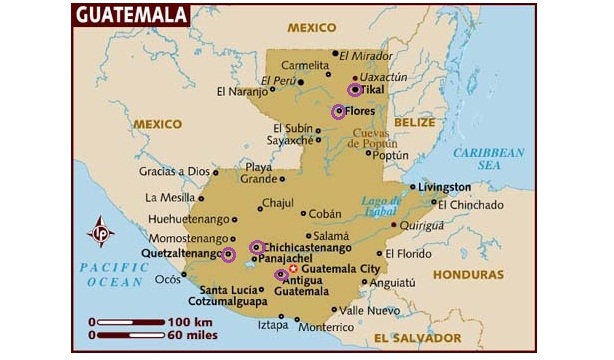
Places we visited are circled in purple.


Maps courtesy of lonelyplanet.com and infoplease.com

Accommodations

Name: Black Cat Hostel (Black Cat Inn is different)

Location: Antigua, Guatemala

Phone/Website/Email: (502) 78321229, http://www.blackcathostels.net, antigua@blackcathostels.net

Price: Q. 160 for a double with shared bathroom, Q.60 for a dorm bed, huge breakfast included

Review: This is a can’t-be-beat deal in pricey Antigua. The hostel is just two block s from the central park and nightlife spots and four blocks from the bus terminal. It has a hip and funky feel with a small bar/restaurant that serves delicious and affordable food (Q.40 for huge plate of nachos). Breakfast starts at 8 am and you can opt for anything from an omelet or breakfast sandwich, to bacon and eggs or a bagel. If you are leaving earlier, they will make you a good sandwich on homemade bread in lieu of breakfast, just ask the night before. It won’t be that quiet at night, and the bathrooms were a little grungy (but still with hot water), but all in all a solid place to stay.

Name: Black Cat Hostel

Location: Xela, Guatemala

Phone/Website/Email: (502) 77612091, http://www.blackcathostels.net, xela@blackcathostels.net

Price: Q160 for a double with shared bathroom, Q.60 for a dorm bed, huge breakfast included

Review: Yes, this is the same chain as in Antigua and again for the same reasons above it’s an awesome place. The hostel is two blocks from the Parque Central which is the only really nice spot to be in town. It’s within 5 blocks of a bunch of restaurants, a grocery store, a movie theatre, a salsa club and the bus stop for busitos that go to the main bus terminal. The atmosphere was much quieter here than in Antigua, the room was bigger, the bathrooms cleaner and there was a pleasant open balcony that circled the second floor. Same breakfast/sandwich option and more pleasant staff to boot. They can also arrange a number of adventure tours which we did not use. Highly recommended.

Name: Hospedaje Doña Goya 1 and 2

Location: Flores, Guatemala

Phone/Website/Email: 502 7926-3538, no website, hospedajedonagoya@yahoo.com

Price: Q.100 for a double (two double beds actually) with fan, Q.140 for lake-view with fan, Q.200 for lake-view with air-con, all have private bath

Review: Another stellar value. Make sure you ask for a room in Doña Goya 2, same owner different building. It’s just a block down the street from Doña Goya 1 and was much nicer. Doña Goya 2 has three floors plus a thatch-roof covered balcony with hammocks and chairs that overlook the lake where you can have a beer and relax, so there is no reason to pay for a lake-view room. Air-con is almost a must in this humid region of the country, but we made do with a fan. Hot water was nice, but we didn’t need it. The non-air-con rooms have two sliding glass doors for entry closed with tiny padlocks, a little suspect, but we had no problems. It’s in a fine part of town; the island is so small that nowhere is really out of the way.

Name: Hi-Et Guesthouse

Location: San Ignacio, Belize

Phone/Website/Email: 501-824-2828, no website, no email

Price: BZ$40 for a double, one bed with private bath, BZ$50 for a double, two beds with private bath

Review: This place was a lovely set of two big houses right in the center of town for a great price. The cute little old man and his wife who own the place charmed us right into staying there. The room was freshly cleaned and had good ventilation plus a ceiling fan so it cooled off pretty well. Hot water was available but seemed to run out frequently. The house had balconies on either side for relaxing plus a fridge and plates/silverware available and a small book collection. They may have had laundry facilities available, but we didn’t use them. San Ignacio is small and this hotel was on the main road so nothing was more than a 5 minute walk away. The only problem was the cockroach in the bathroom that scurried away before we could kill it.

Name: Seaspray Hotel

Location: Placencia, Belize

Phone/Website/Email: 501-523-3148, www.seasprayhotel.com, seasprayhotel.placenciabz@gmail.com

Price: BZ$58 for a double with private bath, farthest from the beach

Review: You’re not going to find rooms much cheaper than this. Even though we had the room “farthest from the beach” it was still only a five second walk to get there. They had some nice lounge chairs in a palm-shaded spot on the beach, perfect for relaxing and swimming. Hot water was nice, but again we didn’t use it much since it was so hot. The room had a fan and fridge which was great for keeping our water and snacks cool. It was in a good spot, but Placencia is not that big. The front desk staff seemed a little ornery. It’s a great budget choice right on the beach, although we found a cockroach here too. Must be something about Belize…

Things to Do/Tour Companies

Name: Adrenalina Tours

Location: Xela and Antigua

Tours: They can do anything.

Review: We booked a shuttle with them from Antigua to Guatemala City and then through them an onward ticket on Linea Dorada to Flores. We figured the shuttle would be more reliable than a chicken bus because we really needed to catch the bus to Flores which leaves only 3 times daily. It was US$10 for the shuttle and US$25 for the bus (bus price is normal, they just call and reserve you a spot). I think the problem was we booked this trip in Xela and it was all taking place elsewhere. When we stopped in Antigua at the store to confirm our ride the night before, the guy at the office said very unreassuringly that he had no idea what would happen until the stores exchanged info at 6 pm that night at closing time. This didn’t leave us with much confidence. We convinced him to call the Xela store and then he said, again very unreassuringly, that everything would be fine. Our shuttle was late picking us up at the hostel and had somehow heard that there was only one of us. The driver rather rudely insisted it was our fault for telling them the wrong hostel and the wrong quantity, until we shut him up by showing him our original receipts which clearly said our hostel name and 2 people. Luckily there was still room in the bus and we weren’t delayed, so we arrived in Guate and caught our bus with no problems. I wouldn’t recommend this tour company because they did not seem very reliable/organized and were also rude on several occasions. There are plenty of other companies to choose from.

Name: Mayawalk

Location: San Ignacio, Belize

Tours: Ruins, cave tours, hiking etc

Review: We read a lot of reviews of this company saying that the owner would wander the streets accosting people and ushering them toward his shop. While he did badger us on the street as well, once we got to the shop and started chatting, he was actually a pretty decent guy. His tour company seemed like the only people who were really interested in our business. They explained a lot about the tours, gave upfront pricing with tax included and were able to change the time of their cave tubing tour for us to avoid the rush of cruise ship passengers. The van was air conditioned and they played a Planet Earth movie during the ride. The guide was laid back and knew a lot about wildlife and vegetation. The lunch was pretty skimpy, chicken curry with two tiny chunks of chicken, rice, beans and watermelon, but it was too hot to eat much anyway. The tubing was relaxing and the caves pretty awesome. We were the only group we saw that had to wear life jackets and helmets. This was probably a good, safe idea but sort of uncomfortable. Overall, it was an awesome trip and we ended up getting a Peace Corps discount of $8 each (the tour was $78 originally) because the owner is a fan (he was taught by PC teachers as a kid), so fellow PCV’s make sure you mention it. Prices are competitive with other tour companies in town.

Name: Chichicastenango Market Tour

Location: Chichicastenango, Guatemala

Tours: Chichi Market, Mayan Spiritual Sites near town

Review: Chichi has a famous Thursday and Sunday market where Mayan people from all over the area come to sell their artisan products, food, produce, flowers and more. We had heard it was worth it to get a guide at the local INGUAT tourism office, so that’s what we did. The INGUAT office is hard to find so you’ll just have to ask around once you’re in the market, it’s somewhere in the center. We didn’t have to arrange anything in advance, just showed up and the woman at the office called a guide who arrived in 5 minutes or less. He spoke in Spanish. We didn’t ask for the tour in English at the office so someone else might have been available. He didn’t really show us the market (which didn’t need much showing), but instead took us to the municipality, church and shrine Pascual Abaj on the hill outside of town to teach us more about Mayan spiritual practices, all of which was awesome. He also took us to an off-the-beaten-track mask shop where we bought a real wooden mask used in Mayan ceremonies. It was better than what we would have gotten in the market, and we bartered down the price, but it was still expensive and it was obvious the guide had a deal with the store owner to bring people by. The only shocker was at the end of the trip. The lady at the office had suggested Q.30-50 for a few hour tour. The guide at the end then asked for Q.250-300. We gave him Q.150 and he seemed a little upset. We weren’t really sure who was right. The tour was great, just negotiate the price beforehand.

Name: Tikal Mayan Ruins

Location: Tikal, Guatemala

Tours: N/A

Review: We didn’t actually get a tour at Tikal, but still have some suggestions. The park is expensive to enter for foreigners (Q.150), but it’s worth the price. You’ll have to buy a map from the guy next to the ticket office (Q.10 basic, Q.20 with animal guide) since there is just one map at the entrance to the site and from then on, signs just have the names of ruins without arrows or maps, not much wayfinding. The map was a little disappointing, it didn’t have info on all the ruins, gave only brief descriptions of the ones it did list, and was not really to scale so don’t take it too seriously. We heard guides were about $60 for any sized group, which is why we didn’t get one. If we could do it over again, we would probably get one since there is almost no signage or info once you get into the site to explain things to you about the ruins or Mayan history. We did well enough reading up on Tikal before and after our visit, but a guide would have been nice.

We recommend arriving early. We took the 5 am bus out of Flores (first bus) and were the first ones to enter the site that day. To actually catch the sunrise, you need to stay closer to Tikal, like in El Remate (30 mins away) or on site (camping or a hotel). The later you go the hotter it gets and the more overrun with people and tour groups. It’s nice to have it to yourself for awhile. You could spend a whole day or two exploring all the ruins, but will likely be exhausted after half a day. For it being such a huge tourist site, the visitor amenities were poor. The electricity was out when we visited, but somehow a restaurant still managed to serve up fancy food, although the drinks were as warm as we were and there was no ice. Buy drinks instead from the vendors at the art and food stalls near the parking lot or museum, they are cheaper and kept in icy coolers, much more refreshing. Cheaper food is available from some small comedors across the street from the visitor’s center. The museum at the visitors center is cheap enough (Q.10) that it’s worth a visit but don’t expect to be wowed. There are some interesting but faded images of the renovations that took place in the last half century and several dozen mostly illegible stellae. Bring your own toilet paper, snacks and plenty of water, especially if you arrive early, the bathroom and snack kiosks were either not open or in the case of the bathrooms, not stocked with t.p.

Name: Placencia Dive Shop

Location: Placencia, Belize

Tours: Snorkel on the barrier reef

Review: We took an all day (9-3) snorkeling tour to Laughing Bird Caye for US$63. I have mixed feelings about this dive shop. We picked it because the owner guy, Shawn, seemed pretty cool and friendly. As it turned out, he wasn’t exactly unreliable, but we were behind schedule all day and things were poorly organized, but maybe that’s just the laid-back Belizean beach bum way of living. The owner told us to arrive at 8:30 to leave at 9. We left at 10:15. No one else who worked for him in the shop seemed capable of doing anything while he was gone. He promised there would be a canopy on the boat, there was no canopy – this didn’t seem to bother anyone else, but the heat and sun were quite strong and for those us who burn easily, it was a horrible trip there and back. Once we made it to the caye, things were fine. The snorkeling guide we brought along was much better, showing us different sea creatures and pointing out cool objects as we swam. The lunch was pretty good, BBQ chicken, watermelon, and cheesy potatoes. We made a stop on the way back in so the owner could do some spearfishing. This was boring for most of us, but well-liked by the guys who participated. I think it was an okay tour. The owner is laid back and will do whatever you want, just ask. I prefer a little more organization, but it just depends on what you like.

Restaurants

(I won’t list everywhere we ate, just the best).

Name: El Paisaje

Location: Xela, Guatemala

Review: This is a Mediterranean tapas place located in the arcade just off the Parque Central. It had nice indoor and outdoor seating with heat lamps. We expected it to be expensive, as tapas usually is, but it was the opposite. The plates were cheap and huge. We ordered the Turkish meat kebabs (Q27) and hummus (Q35) and got four huge meat patties and a good sized bowl of hummus with a bunch of crostini, more than enough to eat for two people. Great value and tasty food.

Name: Utz Hua

Location: Xela, Guatemala

Review: Up two blocks from the Parque Central, this place serves traditional Mayan food, also at great prices. I had the bean soup (~Q30) and Nolan the longanizo (sausage) and tortillas (~Q30), both delicious. It all came with a free huge basket of tamalitos (plain tamales) that we couldn’t finish. They were great in the soup. The place also had some cute and cosy décor and good service.

Name: Frida’s

Location: Antigua, Guatemala

Review: In the hip bar district near the archway, Frida’s serves tasty Mexican food in a cool atmosphere. Mole enchiladas were great and you get free chips and salsa. Seems expensive, but so is everything in Antigua.

Name: Bagel Barn

Location: Antigua, Guatemala

Review: For those of us who have been without bagels for awhile, this place is worth a visit. They have a variety of flavors of bagels and cream cheese and a good sandwich menu. A combo with smoothie and a piece of cake will run about Q.50. Come in the morning before your bus to get bagels to go for Q.6 each and a cup of cream cheese Q.10.

Name: Mr Greedy’s

Location: San Ignacio, Belize

Review: Not in our guide book, but one of the only places that was consistently open and consistently good. Great, hearty breakfast sandwiches (~BZ$9) are ideal before an adventure tour. Dinner is solid with burgers, pasta and the like, plus full bar. Don’t miss the Italian fry doughnuts, a pile of sweet doughy triangles covered in cinnamon sugar for just BZ$3.

Name: Rumfish y Vino

Location: Placencia, Belize

Review: Pricey but delicious Mediterranean and ocean inspired dishes with a fun bar. Try the olive tapenade (BZ$13), Lebanese flatbread pizza (BZ$24) with grilled shrimp or the daily specials. The only downside is no beach view and very little breeze. Come early to get a seat, it fills up fast.

Other Tips

Buses: Basically anywhere in either country you can hire private shuttle buses to take you where you need to go. They will be faster but much more expensive than your normal bus service. If you’re okay with a chicken bus (big yellow school bus), take it to save money, chat with locals and get a real cultural experience. Just watch your belongings and you’ll be fine. Most people on the street are happy to help you find the bus you’re looking for if you get off to change.

Money: You can always change money at the borders from moneychangers who will bombard you. You won’t get the very best rate, but it’s worth it to change a little to make it to your next destination.

Water ferries: To get to Placencia you can go via land (ask bus drivers for help) or via water taxi from Independence where the James Bus stops (from Belize City via Belmopan and Dangriega). The water taxi is BZ$20 per person for a 15 minute ride through the mangroves, but leaves very infrequently so if you’re coming from far away, make sure you’re on an early bus. We saw ones leave at 12:00 noon and the next was at 4 pm. You can also take a ferry, or actually a small boat, from Placencia to Puerto Cortes, Honduras or vice versa. The two hour ride is pleasant enough. The boat leaves from Puerto Cortes Mondays and leaves Placencia on Fridays. The boat seemed to fill up, so buy a ticket in advance at the Placencia Tourism office. BZ$110 one way, plus you pay a BZ$7.50 environmental fee on board when leaving Belize.

Honduran PCVs: You can use your Banco Atlantida card for withdrawals at ATMs (L.30 charge plus the ATM bank charge), up to four withdrawals per month, or you can use it as a credit card for any type of purchases. Cards are mostly accepted only at nicer restaurants and nicer hotels. Always ask tour companies for a PC discount, especially in countries like Guatemala and Belize that have active PC programs. Twice daily shuttle buses run from Copan Ruinas to Antigua (6 hours) at 6 am and 12 noon from ViaVia Café. Try to book it in advance (can’t do it by phone) by getting to Copan a day early to reserve a spot since the buses fill up. $20 one way.