Monday, October 24, 2011

Into the Great Wide Open

If it wasn’t shocking enough arriving back home to La Esperanza after 10 days in the States, we took a trip to a small community the week after we got back to do an initial evaluation for a water system which ended up being about as big of a contrast with the U.S. as one could find. We had planned the trip over a month ago at the request of a convent of nuns that is working to get funding for the system. They wanted an evaluation of the water source and for us to take some GPS points to make sure the water would reach all the houses and the school before Nolan would do the actual survey and design. Of course, they also told us that the whole thing needed to be completed (i.e. surveyed, designed and built) by March or the funders would back out, typical last minute Honduran planning. We’ve barely seen systems completed in a few years let alone a few months, but nuns are wishful thinkers I guess.

The bus schedule was such that we planned for a three day trip, one daily bus leaving La Esperanza to get there in the afternoon, a day with the community and the third day taking the one daily bus back. I decided to tag along really just for the “fun” of it and to see if while Nolan was doing the survey later I could do some charlas or trainings on basic health, HIV/AIDS or income generation.

We left Monday at 11 am on a lovely chicken bus in slightly drizzly weather for our 3 hour bus ride to the municipality of Monteverde. Long bus rides are not all that bad to us anymore, and neither are unpaved roads, but the combination of the two can be lethal. An hour in and our butts were aching from the poorly insulated seats and my shoulder was practically purple from knocking into the window every time we went over a bump (which were numerous). There was one point the bus could hardly make it up a slippery slope and we had to retry the ascent after the ayudante (bus assistant) threw some rocks on the roads for traction and we picked up speed from farther back. The scenery was the only redeeming aspect, mile after mile of lush forests interspersed with mud-brick houses and plots of farmland with beans, corn, potatoes and broccoli, followed by the expansive Valle de Azacualpita with grazing cattle, then the upper virgin pine forests with hardly a soul in sight. Then we were there. But where exactly…

The bus had dropped us off, not in the center of town as we requested but farther up so we had to hike back, downhill luckily, into the town. Town is hardly what you would call the center of Monteverde, a handful of buildings (school, pulperia and few houses) haphazardly scattered around a largely out-of-place church with an attached house for the nuns. This was it, we were in the middle of nowhere, where the road ends. To boot, Monteverde was not even the community we would be doing the water evaluation for, that community was a 2 hour walk uphill from Monteverde. More on that later.

We found our nun host and settled into the rather comfy dorm accommodations they had set up for visitors. Seeing as how there was nothing else to do and it was only 2 pm, we took two rocking chairs on our little patio and read and watched the local happenings, some kids playing soccer, other kids trying to climb trees, and a whole host of people just standing around. The nun’s house was pretty much the center of activity for the town and we overheard many interesting conversations.

Action in town

The first was the nun talking with a family of three that had come into town to “run errands.” Only this errand run, if you could call it that, had cost them an 8 hour walk from their home, one direction. They explained how they had left very early in the morning to get there, and now, each toting a box of goods, at 3 pm, they were going to begin their 8 hour journey back home. Hopefully the moon will be good, they said, since we will arrive late. I looked at their feet to find the mother and daughter in nothing more than a pair of Old Navy flip flops. These people’s lifestyle was by far the most rural and challenging that I had witnessed thus far in Honduras. How often did they make this trip? I wondered. How much did their feet hurt? How would the little girl ever go to school? And what was it really like to live 11 hours from the nearest “major” town like La Esperanza where you could buy non-powdered milk or a pair of pants?

Next was a woman who came for something of a confession I supposed, because the nun guided her into a private room, spoke with her for awhile, then she was gone. Two young girls then approached and asked a question, after which the nun returned with tubes of medicine of some sort and advised them how to use it for whatever ailment they had. Then a woman brought purses made out of recycled chip bags that she in turn sold to the nun who said she sold them in the U.S. Then some men brought firewood and squash. Finally a woman brought our dinner. This nun was running a church, pharmacy, artisan store, community center and hotel all in one! But considering as how none of these other things existed in the town, I guess it made a lot of sense. But the real fun had yet to begin…

After a quiet evening and early to bed, we woke up at 5 am to leave by 6 to head out to the community. Luckily, instead of having to walk the first 30 minutes, the nun gave us a ride. But it was all uphill from there, literally. We spent the next two hours hiking almost straight up a mountain, the Hondurans skipping along like mountain goats while I thought multiple times that I might pass out and then roll back down the mountain. I am all for hiking, but this was excessive. Luckily I had a very tolerant husband and group of Hondurans with me who didn’t seem to mind me stopping every 5 minutes for a breather. But at last, we arrived, somewhere. It was a house in the middle of the forest with a view out over layer upon layer of bluish green fog-tinged mountains, a view that someone would probably pay millions for if they knew it existed.

Kitchen of the house

We had a cup of coffee which revitalized me, then headed to the fuente or source of the water for the system. Nolan directed our newly acquired team of community members how to set up a pipe in the stream and measure the flow of the water, counting how long it took to fill a bucket. These people’s willingness to work was unmatched; guys using their hands to chip dirt and rocks from the banks to build a dam, young boys hacking away branches with machetes to make space for us to stand, the president of the water board up to his knees in the chilly water trying to place the pipe securely, and a random dog around for good measure, everyone covered up to their elbows in mud, but all with big smiling faces. It was inspiring.


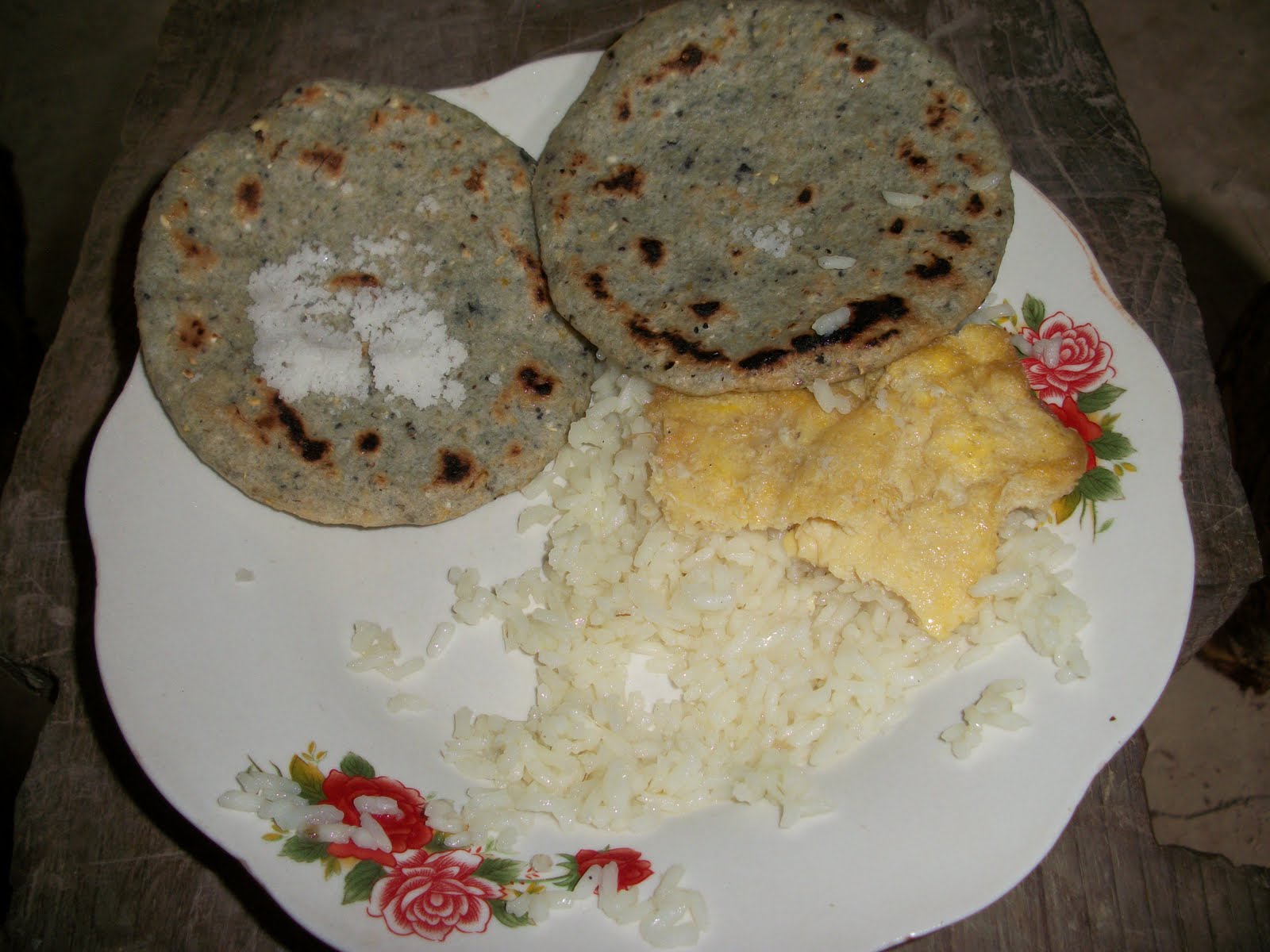
From the fuente we followed the anticipated path of the water line, stopping at houses that would almost magically pop out of the underbrush to take points with our GPS to get an estimate of the distance and altitude. Unfortunately, we arrived at the school only to find that it was too high for the water to reach it. This provoked a discussion about their options which were basically to not have water reach the school or to find a new fuente that was at a higher altitude, a big decision either way. After visiting a good portion of the houses, we were served lunch, a delicious but over-salted meal of fried egg, rice and blue corn tortillas (my favorite!).
We then began the journey back “down” to Monteverde. Whilst I had thought our whole initial journey had been uphill, apparently a good portion had been downhill because as we began our hike back, we were suddenly faced with another huge mountain to climb. At this point, I had already been hiking for 4 hours and my rubber boots were beginning to create blisters and I had no tolerance for more uphill. But our charming guide, who had so kindly whittled us walking sticks in the morning, didn’t seem to mind my slowness and let me go at my own pace. We came to the top of the hill and looked out one direction over the community that we had just surveyed dispersed among the mountains, then over the other side looked out and could see the church of Monteverde in the distance, our starting and returning point. Both looked so far away, and it hit me what a great trek I had made that day, and I felt proud.


That white building is where we are headed

We arrived in Monteverde just as it started to sprinkle and discovered that the nun was headed down to La Esperanza and would give us a ride. We jumped at the chance since it meant us avoiding the 3 am bus ride back the next day. The ride back was quicker than the bus, but we were mostly too tired to speak or think. After the rural mountains of Monteverde, La Esperanza was practically New York, glistening in all its dusty, commercialized glory. We were happy to take a hot shower and relax with a movie, but the reality of Monteverde and the community had stuck with us. There’s is a place that only a handful of Americans may ever have a chance to visit, that few in the U.S. could even imagine, but nevertheless it is a lifestyle that thousands of people fight to live every day without so much as a complaint, in such extreme conditions that it puts all of our supposed discomforts to shame.

Friday, October 14, 2011

In a word...excessive

Having just returned from our first, last, and only trip back to the U.S. during our service, we realized that we could sum up the U.S. in one word, excessive. Excessive seems like it always has a negative connotation, but in this case, it was both positive and negative. Our life in Honduras is not exactly difficult, but in comparison to the U.S. it certainly is simple and austere in a sense, no frills, no pomp. It’s like the U.S. is an ornate Victorian house and Honduras is the split level home next door (you know, like in the game of LIFE). Both are livable, just one is more luxurious than the other, maybe somewhat unnecessarily so.

What hit us first, almost literally, as we stepped into airport after airport and airplane after airplane on our journey in, was the air conditioning. We brag that we are hardened to the cold in Honduras where in the winter we live in a 45 degree house with no heat or insulation, but even in jeans, jackets and fleeces, we were still freezing to death everywhere we went in the US. The A/C was on full blast, even in Detroit where the temperature outside was colder than the air conditioned interior. Even more shocking was that others didn’t even seem to notice. While we huddled together for warmth, people strolled about in cargo shorts, flip flops and tank tops, seemingly oblivious to the arctic temperatures. We can’t remember the last time something was really air conditioned in Honduras, but in the U.S. everything from the grocery store to the corner deli had A/C. It seemed, well, wasteful. What a huge expense to cool places that didn’t need cooling, just because you could.

The next thing that hit us was the transportation network. The Detroit metro area is not famous for public transit, so of course, someone picked us up at the airport in a luxuriously not-a-pickup car, then drove us to Nicki’s grandma’s house. The scale of the airport, the traffic lanes, the number of cars, was astonishing. Four lanes of highway in each direction, sometimes six, a median as big as four lanes of traffic! The biggest highway in Honduras is just NOW being expanded to two in each direction. Four lanes felt awkwardly large, six felt incomprehensible. What do people do with all this? Street lights were a wonder (every block!). There was just so much concrete and asphalt it was ridiculous. Of course, we have a more urban mindset and this was the suburbs, but it solidified our feeling that we might never be able to live somewhere with so much road and so little of anything else.

At Nicki’s Grandma’s house, another wonder was in store. Refrigerators. Not just refrigerators per se, but refrigerators taller and wider than the both of us, literally overflowing with every condiment known to man, leftovers for weeks, and enough extra food lying around to feed a Honduran family for possibly a month. Poor people in Honduras rarely have refrigerators and certainly do not have the double doored, ice-producing monstrosities we’ve always known in the U.S. Our fridge is only ever half full at best, as we fear a random power outage will destroy anything we buy. Why would anyone need to have so much food on hand? Why would you cook three times what you needed to eat? Just to stick some in the fridge? Mind-boggling. But at the same time refreshing to know that you could open up the fridge for lunch and know there were 10 delicious options awaiting you. For people like us that enjoy food so much, it was a welcome excess.

After being cooped up in cars, planes and houses for a few days, we knew we had to get out and get walking. It was like we were forgetting you could walk outside to go places. Nicki’s grandma lives in Dearborn, an inner ring suburb of Detroit where things in are far, but not that far. A trip to Nicki’s grandma’s favorite deli was only a 20 minute one-way walk, a common jaunt for us in Honduras. But what silently shocked us were the sidewalks. Luxuriously large at 3 feet wide, smooth and crack-less, and complete with handicap ramps, the sidewalks were fitted on every single street. Even the ridiculous eight lane boulevards had them! There was no worry of where the sidewalk might end, or tripping over a crumbling curb, or falling off into the muddy gutter, just pure sidewalk goodness. But guess what? NO ONE WAS USING THEM. We saw maybe two fellow walkers in our entire round trip (and they were walking dogs, another American oddity to us ‘Hondureños’), and the passersby in cars seemed to stare at us as if to ask why we would dream of walking. All this beautiful space and no one to use it, tragically excessive considering the fact that we would die to have these same sidewalks in Honduras to avoid the slip and slide of mud that is our entire city street system. Could we get some of those imported down here if you’re not using them?

Not only sidewalks shocked us, but the whole landscape in general. Magnificent trees lined every street. Houses were fronted by polished lawns and gardens overflowing with mums and gnomes. Even medians, the wasted space that they are, were trimmed and manicured. We also arrived at the perfect time of year when the air gets crisp and the leaves are beginning to change and fall, the landscape a blend of bright oranges, reds and yellows that is unmistakably Michigan-y. Apples were in season and pumpkins lined every store front. Halloween decorations were in full force (we almost forgot it existed). It was beautiful to be sure, a level of urban design that Honduras has clearly not arrived at. But again, it was a little excessive, but nicely so this time. We realized how much you miss the climate you call home, not just the house and people.

Water and water appliances were another big deal. We more than once pitched the t.p. into the trash instead of the toilet, whoops! Who knew pipes could handle it!? We always seemed to be second guessing ourselves when it came to filling up a glass of water from the tap, brushing our teeth, or using a newly cleaned cooking instrument without drying it first. It just felt wrong. And what a wonder is the washing machine that can cut our laundry time from 2 days to less than 2 hours. In a world of amazing appliances, we put aside for 10 days all the fear, questioning, and caution we’ve come to know in our daily life in Honduras. And it felt…. Relaxing. Almost too good. Almost like we shouldn’t be indulging in these excessive modernities while we knew that so many people go without them, more so than we do even in Honduras.

We indulged in so many things while there, huge sandwiches from Zingerman’s in Ann Arbor, a Michigan football game rout over Minnesota, apple cider, caramel apples, pumpkin donuts, grilling, kettle chips, public art, wine, sushi, dining out, good beer, a swanky rental car, 24-hour cable t.v., superstores (that would literally take up ¼ of our town in area), drive thru banking, hot water (in the sink!), and most importantly our friends and family. It was hard to pull ourselves away, but we did so knowing that our life waiting for us back in Honduras would be one of simplicity and ease that we have also come to love.

Tuesday, September 13, 2011

Medical Brigade, Reconnect, and a Birthday Party

You may remember from last year an entry about a medical brigade in the town where Nicki had her training. This year, we both were able to participate for the week-long brigade. We were surprised at all the changes that had taken place in the tiny town since our last visit. The most noticeable was 25 new wind turbines that had been erected on the highway just outside of town, still only half of the 50 that will be put up by a German company to supply electricity to the capital. This is the first wind power project in the entire country, and the 50 turbines will produce over 1 MW of power. The new turbines had been erected in a span of just a few months, and while not yet fully operational, give a surreal feel to the atmosphere. We wondered for a brief second if we were still in Honduras, then we looked at the people around us on our chicken bus and snapped back into reality.

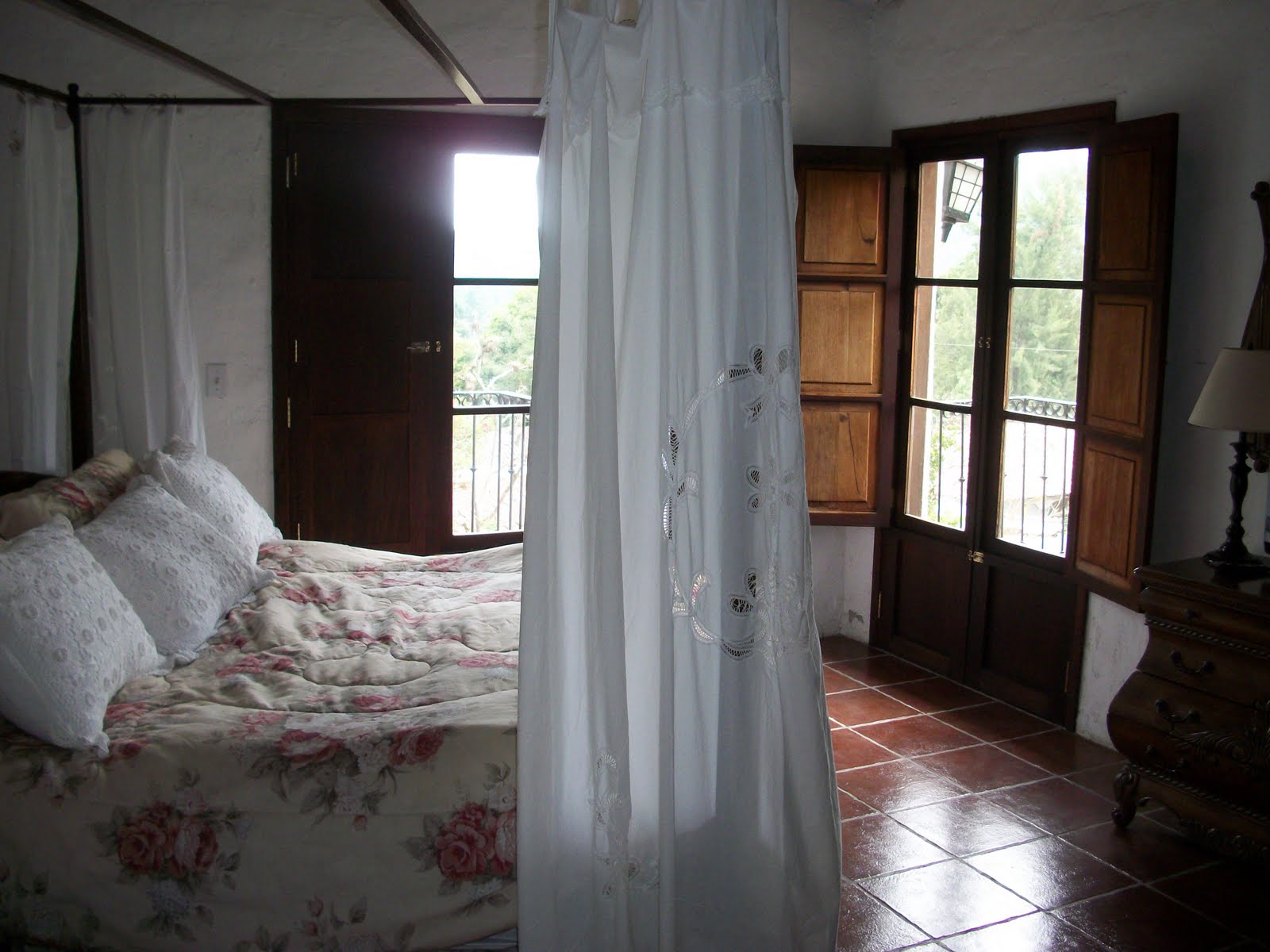
The town itself also had some improvements. They produce a great deal of painted pottery there and had in the last year constructed three separate clusters of artisan shops, which all sold exactly the same products - not sure if that was such a good business decision – but they looked nice. There were also a number of new restaurants, including a new pizza and pasta place which we didn’t have time to try. The health center had added an awning to protect waiting customers and we heard about a new sewer water system that had been put in. The nearby town had actually put in a median in the two lane highway with plants and streetlights! Unfortunately, violence must also have been escalating since there was a curfew of 9 pm in place and we had armed police at the brigade all week, which we certainly did not have last year. As usual, we were put up in the house of Don Ricardo, the Honduran ambassador to Belize who organizes the brigade, and who has a B&B type hacienda in which we received the ‘honeymoon suite.’ Beautiful to say the least.

The honeymoon suite

Most of the same doctors came back from last year as well as some new ones including a new cardiologist. Nicki ended up working with the gynecologist, while Nolan worked with a general practitioner who also coincidentally is an Elvis impersonator (no joke, he actually has a CD and gave us a greatest hits montage on the bus). While everyone else thought Nicki had drawn the short straw, she ended up mostly enjoying her work. Sexual health is one in a long list of health topics that is poorly discussed and taught here. There are no sex-ed classes and the rates of infidelity mean that STD’s are constantly passed around, and women have little to no say in their reproductive health. She saw teenage girls already with multiple children, a 40 year old woman who had just given birth to her 10th child in her home, many people with STD’s as well as several people who likely had either cervical or breast cancer – most of which have no financial means to have further testing or treatment. Nolan did the normal stuff. We seemed to be less busy than last year, but still ended up seeing over 1700 patients in 5 days. Next year they are talking about raising money to bring more equipment to do testing and possibly having funds to be able to pay for people to go to Teguz for important surgeries. We obviously think this would be a step in the right direction to get people more help rather than just doling out vitamins and ibuprofen.

Hanging out at lunchtime


Two adorable kids whose pregnant mother Nicki saw

We also made a visit to Nicki’s old host family who were more than welcoming. They couldn’t stop talking about how much they loved and missed her and how they had remembered her birthday and how wonderful she was. Her 17 year old host brother and his 16 year old girlfriend had just had a baby 5 months earlier (talk about lack of sex-ed….), and although the situation in the household was a little more difficult, the baby was as cute as could be and so happy - not a fuss out of him the whole time we were there. It is likely the last time we’ll see them before we leave so it was a little bittersweet, but we had a good time catching up.

Host family with the new baby

The week culminated with the doctors treating us to dinner at perhaps the fanciest restaurant in Teguz. It was called La Cumbre, a beautiful place at the top of the highest mountain overlooking all of Teguz. We sipped wine and Johnnie Walker while munching on beef carpaccio and toasted camembert and gazing out over the balcony at the sparkling lights of the city in the valley below – it almost could be mistaken for a safe and beautiful city from all the way up there. Dinner was a three course affair. Nicki had Greek salad and spicy shrimp linguini and Nolan had creamy potato soup and bourbon grilled steak, and we both finished off with chocolate cheesecake. The whole experience was surreal and we soaked in every minute and morsel. We calculated that it must have cost at least $50 per person with drinks and everything for 50 people, about L. 50,000 – a year’s salary at minimum wage or slightly less than a Peace Corps volunteer’s yearly salary. An amazing end to a busy but fun week.

Teguz at night

Not sure what's going on here....

We were barely home for 3 days before having to head out to Reconnect – our annual meeting of all volunteers in our respective projects. This year, three projects held Reconnect together, Health, Wat/San and Business, so not only did we get to see our own project team and meet the new groups, but we also reunited with many people from our training group, some of whom we hadn’t seen since swearing in last May. It was a quick and reckless two days, as one could imagine it would be with 100 young adult gringos in one place with plenty of beer and alcohol. We got some updates about changes going on in Peace Corps and security threats, as well as new Peace Corps initiatives and projects. While we felt a lot of it was either repetitive or irrelevant to our work, we did get some new ideas about work we could do in our last 8 months of service. We’re trying to think of a way to get a protected area or national park in our department, since we don’t have any yet. We’re also thinking about how to do a recycling project, especially with schools in town. Someone has also developed a simple mapping software that could be useful to create a tourist map of our department – also something to think about. Luckily, the workshop was only about 1.5 hours from our site so we were back in time on Saturday to listen to the amazingly ridiculous Michigan vs ND game on internet radio while grilling some sausages, almost as if we were back in the States.

On Sunday we visited a PCV couple about 30 minutes away for our friend Jacob’s birthday party. They invited us to their host family’s house where they were preparing food, games and a piñata for us and all the neighborhood kids. They served us entirely too much food, first enchiladas then candy, then baleadas, then more candy, then cake. We were stuffed. The games were the funniest thing ever. First was an old classic, musical chairs, but instead of having everyone play at once, they did 4 people at a time(?). The kids had no idea what the rules were so they would just sit down in the chairs whenever they wanted instead of waiting for the music to stop. And instead of removing the extra chair at the start someone’s job was to move it while the kids were running in a circle, which made for more than a few collisions. Next, some candy on a string game. This involved tying a candy in the middle of a piece of thread, then having two people, each with one end of the thread in their mouths, try to suck their way up the string to the candy in the middle. Think Lady and the Tramp, but impossible with sewing thread. Nolan won our match. Then the game where two people tie balloons to their feet and try to stomp on the other person’s to pop it. This ended up lasting two rounds since only 3 balloons were available. The prize for winning any game was a package of crispy cream filled wafers, a lot of incentive to win, haha. Then, the prized piñata came out. We remember this being a lot easier and more straightforward when we were kids. Here the point is to make it as impossible to hit as possible so someone is there to pull it up and down and swing it back and forth so you have no idea what you are doing. Jacob kept getting hit in the back of the head with Dora La Exploradora causing him to whirl around like a ninja to attack the air. When the little kids got a chance they would pull the piñata up so high none of the kids could come close to reaching it. What is the point then, really? The craziest thing was the kids who, when even one piece of candy would fall, would scramble to the center to grab it, many times just narrowly avoiding a stick to the head, shrieking like banshees. One woman commented it was like watching chickens run to eat up corn thrown at them (like in Cinderella) – so true! After Dora had been brutally attacked, the older kids continued to antagonize the others by climbing into a tree and throwing handfuls of candy from extra bags they had, just to watch them scramble and shriek we suppose. It was one of the few Honduran celebration we’ve been to, and we enjoyed ourselves, laughing heartily at the ridiculousness of it all.

Wednesday, August 24, 2011

Eating in Honduras can be tough

Peace Corps tells you that everyone thinks they have the best site by the time they leave. We weren’t sure about La Esperanza when we first got here, it was smaller than we had hoped for, although it was nice and cold. But now, after more than a year, we would definitely say that we think we have the best site. It’s because of the food.

Our time thus far in service has allowed us to take up a number of new, one might say old-fashioned, cooking practices as well as perfect many others. This has been the result of two coinciding phenomena, 1) we have a lot of extra time on our hands to make things from scratch we normally would not and 2) our selection of food products (while uniquely excellent in Honduras) is still sub-par compared to the States and we can’t get food that we normally enjoy, such as good bread, butter, cheese, pizza, Italian food etc. Thus, we have to take matters into our own hands. We thought we’d explain some of our food habits and cooking forays for you to enjoy (or be jealous of).

Best Farmers’ Market in Honduras

First of all, Gracias a Dios, and Gracias a our project directors, for putting us in a site meant for foodies. We don’t like to brag, but we have possibly the greatest farmer’s market in all of Honduras. Not only is the market full of your standard Honduran fruits and vegetables like bananas, potatoes, and tomatoes, there are also local apples, strawberries, peaches and blackberries and seasonal mushrooms and vegetables like eggplant, snap peas, butternut squash, and white beans that are unavailable anywhere else in Honduras. We also get to try exotic fruits that we either didn’t get a lot of or weren’t at all exposed to in the U.S. like mango, papaya, guava, sapodilla, soursop, annona, noni, nance, passion fruit/granadilla and lychee. The market is open every day of the week and just two blocks from our house, something rare even in the US. Yes, we are spoiled. We’ve had a chance to use some of our unique ingredients to make things like peach & berry cobbler, apple zucchini brownies, butternut squash ravioli and soup, eggplant parmesan, fried mushrooms, homemade ginger ale/beer, and spicy Moroccan white beans.

Chorros, a local wild mushroom (Caesar's mushrooms if you want to look them up)

Block of unrefined cane sugar (known as panela, piloncillo, or dulce here)

Salsa Sundays

While fresh tomatoes are not entirely seasonal here in that we can get them year round, they do increase in price four-fold during the off season, from L.5 in February to L. 20 a pound now. In spite of the inflated prices, we have gotten into the habit of having Salsa Sundays. You might think that salsa would be common in Honduras, but Honduras is not Mexico. There is a salsa-ish side dish called chimol, but it’s more like pico de gallo, not spicy and not well chopped/blended. The only ‘salsa’ here is jarred, supermarket salsa like Pace or Tostitos. But we can get all of the ingredients to make a delicious Mexican (or is it Tex-Mex?) salsa, so almost every Sunday, we buy a pound of tomatoes to make a big bowl of fresh salsa. Throw everything into the blender and that is our lunch, chips and salsa - sometimes even with cheese if it’s during one of our grocery store’s cycles of having real cheese.

Cheesemaking

Our primary grocery store in town has expanded its cheese section immensely since we arrived, going so far as to now import from Wisconsin things like gouda, swiss, monterey jack and to our great pleasure, feta. Not all the time mind you, it cycles between periods of abundance and scarcity. But we still can’t get true ricotta or fresh mozzarella for our Italian cravings, so we turned to making it ourselves. Our cheesemaking process begins with a 15 minute walk to the other side of town to a house in a strange cul-de-sac (yes, they exist here!) where we can buy milk fresh from the cow that comes in twice daily. We bought a large plastic container specifically for the purpose of transporting milk that comes in quite handy. We request our bottles of milk, they fill up our container and we’re off. Cheesemaking might sound scary, but the basic principle is add some chemicals to milk and heat it to get it to curdle, let it sit, and you have cheese. We add citric acid in granular form that we got from a cheesemaking kit, but you can also add lemon juice and the like to start the curdling. This basic form is ricotta. To get mozzarella from this, you add a little rennet (which here they get from soaking animal intestines, but we have vegetable rennet tablets) to hold the curds together with that familiar cheesy elasticity. The only real difficulty here is the lack of microwave, which makes heating and stretching the curds for mozzarella much more difficult. Instead, Nicki’s dons housecleaning gloves and submerges the cheese by hand into a pot of near-boiling water, then stretches the cheese like taffy. The mozzarella we form into a ball and cool in ice water, then it’s ready to enjoy – and much more delicious than quesillo. It’s still quite a process so we don’t do it that often, but it’s absolutely essential for a good lasagna, stuffed cannelloni, or on pizza.

Carrying home our leche de vaca

Giving it a taste - 'Ahh, fresh milk'

Straining the curds

Finished ricotta

Fresh mozzarella ball

We should have thought of it earlier. All this time we’ve been buying fresh milk to make cheese and it only just recently occurred to us to skim off the cream layer for heavy cream, whipped cream and butter. The process for making butter is maddeningly simple. Let the milk sit. Skim off the creamy top layer. Put cream into a jar, shake and voila, butter that is 1000 times better than anything we can buy here. It was especially delicious on some simple biscuits and wheat bread and we look forward to putting it to better use in the future.

Skimming the cream off the milk

Delicious fresh creamy butter

Breadmaking

As we said before, we’ve had time to go back to basics with some of our cooking practices. In the U.S. we, and probably you all, were accustomed to having a variety of fresh, delicious breads at your local supermarket, grocery store or specialty store, rye, wheat, French, baguettes, you name it. Here, bread is a very distant second to the tortilla. Grocery stores stock regular white Wonderbread lookalikes and sometimes wheat, plus a few hotdog or hamburger buns; that’s it. We’re lucky enough to have a bakery in town that does French bread, but other than that, just pastries. After a few months of eating crappy sandwiches, we decided we’d had enough, and started making our own bread, which honestly we had never had the need to do before.

French bread fresh out of the oven

Now, you say, bread is easy, throw everything in your mixer for a bit, let it rise and bake! Well, we have no mixer, so everything is with wooden spoons and hands. Flour is tougher than you think. Also, our concrete laden house and cool temperatures make rising unexpectedly slow. We found it’s best to let the dough sit the fridge overnight. We don’t do it every day or even every week because it’s an arm-exhausting event, but at least twice a month we make some type of bread. We’ve done white loaf, honey wheat loaf, cinnamon sugar, wheat free form, French bread, pitas, cheese herb bubble bread, foccacia and breadsticks. We aren’t experts, and we probably won’t have the need to make too much bread when we get back to the States, but it’s been interesting to try new recipes and cooking techniques and nothing beats a fresh loaf of bread, hot out of the oven, smeared with olive tapenade, pesto or made into crunchy grilled cheese sandwiches.

Cheese herb bubble bread

Cinnamon bread

Exotic Ingredients

Every trip we take to Teguz culminates with a mandatory trip to Mas x Menos, a supermarket with many luxury, exotic and imported items from the States and elsewhere. Here, we spend half a month’s wages stocking up on things we can’t find anywhere closer to us, namely canned tomatoes, parmesan cheese in a block, chocolate chips, kettle potato chips, prosciutto and even Celestial Seasonings tea. These are the things that are now as exotic to us as pink sea salt, hand trimmed saffron and white truffle oil are to you all in the U.S.

Tempura shrimp sushi

Pizza

Anyone who knows us will probably also know we are pizza lovers, but not just any pizza. We strive to create an authentic Neapolitan Italian style pizza with the crisp yet chewy crust, pure tomatoes, mozzarella and basil and a good douse of olive oil. Since we left Italy, we’ve been plagued by a lack of proper pizza making tools and ingredients, most notably a wood burning oven. As you can imagine, it hasn’t gotten any easier being in Honduras, but we still strive to do the best we can, and have made some pretty delicious pizzas. When we feel up to it, we will make fresh mozzarella. We finally got a basil plant for fresh leaves and we can do a great pesto pizza. We’ve chanced upon prosciutto and Kalamata olives in other sites and lovingly cradled them on the way home. Recently we even came across a recipe for pizza with bacon and a cracked egg on top. It’s a little difficult to get it cooked just right, but if you’ve never had it, and come across it on a menu somewhere, don’t shy away, it is amazing.

Pesto pizza with chicken and Kalamata olives

Bacon egg pizza

Cooking Without Power

One of the biggest cooking challenges we have encountered is the power outage. This being the third world, this can happen as often as every day. Because we are in a larger site, a power outage rarely lasts longer than a few hours (unless it was a planned all-day outage), but we have had outages that have lasted several days. Having a gas stove, you might think that we shouldn’t have a problem cooking when the power goes out. After all, we actually can still cook. But what you are forgetting is how much closer to the equator we are. The length of our days varies only about one half hour throughout the year. That means that it is consistently dark at 6 pm. And during the rainy season, dark (especially without power) means pitch black. Have you ever tried to cook by candle light? Try it. It’s not that easy. Lack of power also means that we cannot open our fridge if we hope to preserve anything inside, so many powerless nights we revert to some old staples like spaghetti marinara and PB&J.

Here are some things we’ve been able to conjure up in our Honduran kitchen. Recipes available upon request.

Melanzana parmigiana (Eggplant Parmesan)

Hummus

Egg sandwich on homemade wheat bread

Moroccan chicken and beans with freshly made pitas

Butternut squash ravioli

Spicy honey stir-fry

Cinnamon sugar pumpkin doughnuts with raspberry sauce

Blackberry apple fruit leather (it's a little dry because we left it in the oven too long)

Sunday, August 7, 2011

Just Another Day at the Beach

It’s been a month, but I’m finally getting around to writing about my parent’s trip to Honduras. While Nicki and I are not really beach people, my parents are, so we decided to take them somewhere on the north coast, Tela, which is pretty close to San Pedro, where they flew in and out of. Plus we had never been to Tela, and had heard good things about it.

Tela grew and developed largely in the early 20th century as the Honduran headquarters of United Fruit Company (Chiquita). While there is still banana production in the area, United left Tela in the 70’s and there are only a few of their buildings left in part of the large beach resort in town. The agricultural production seems to have switched to palm oil, since now the entire highway there is surrounded by rows of massive palms as far as the eye can see. The main visible infrastructure left behind in Tela is the railroad. United built an extensive network of trains to transport its people and bananas. The only remaining rail in Honduras is a passenger train from Tela to San Pedro Sula. While I’ve always been intrigued by the train when Nicki and I see it near the bus station, we took the much safer alternative in Honduras, a private rental car. Being PCV’s, we are forbidden from driving, so my parents were forced to take the wheel, not always a relaxing endeavor in Latin America. But after driving on a lot of dirt roads near our town, and constantly cursing them, my parents were delighted that Tela was big enough to be completely paved.

We stayed at Hotel Caesar Marisco’s, which was recommended by our friends. Few Honduran coastal towns have much of a beach, but Tela has one of the best. Our hotel was right on the small boardwalk along the beach, a group of 4 or 5 hotels and restaurants. It is only a couple blocks long, but is also one of the few areas in town where you can be reasonably safe walking around at night. There were plenty of people in the hotels and restaurants, so it was fine to walk to dinner, but not really anywhere beyond that. We ate at the restaurant in our hotel a couple times, which was no better or worse than the others. The best part of the hotel was the roof top pool, from which we could watch the people walking up and down the boardwalk. It was a nice relaxing spot to get away from the heat of the coast.

The main reason we chose to go to Tela was its proximity to several national parks, and plenty of tour companies to take you to them. We went with Garifuna Tours because they had a three day, three tour package for the price of two. Unfortunately, we didn’t have enough people to do that tour, so instead we went on two tours with them, and drove ourselves to the final one.

For the first tour, we hopped in a boat that took us across the bay to Punta Sal National Park (officially Parque Nacional Jeannette Kawas). Jeanette Kawas was an environmentalist who was one of the leading voices trying to prevent development and deforestation in the area of Punta Sal to preserve the natural wildlife. While the group she organized succeeded in creating a national protected park, Kawas herself was murdered in 1995 by opposing activists, so they named the park in her honor. The boat ride got off to a slow start, seeing as how the river we were on lacked the strength to reach the sea. We jumped out and watched as the guide, driver, and several other guys pushed the boat on halved PVC pipes over the beach to get to the bay. As we sped away, we noticed a guy digging a trench to connect the river and bay and wondered if he would even be close to done by the time we got back. The boat ride was about an hour, and when we got there, we disembarked and followed the guide through the jungle. He explained about pirates who used certain trees as masts, and provoked the howler monkeys with his calls. My dad walked straight into a spider web with the gigantic golden silk orb-weaver spider. Luckily the spider didn’t seem to notice and my dad made it out alive. It was an interesting hike, except for the swarms of mosquitoes and the Peruvian couple who lagged behind and who needed everything re-explained in Spanish. At the end of the trail, we met up with the boat driver again who drove us back around the point, crashing over huge waves, to a small clearing and beach where we had lunch, typical Garifuna fare of fried fish and rice. It was nice relaxing at the beach, but unfortunately the water was too choppy for any good snorkeling, which was supposed to be the highlight of the trip. On the trip back we confirmed the trench wasn’t quite low enough yet for the boat to get through. We went for it anyway, and this time my dad and I helped push the boat through.

Guys pushing the boat across the beach into the bay

Golden silk orb spider (leg span of about the size of your hand)

Beautiful Punta Sal

On day two, we set off in the opposite direction, east, to Punto Izopo, another national park, this time to kayak up the Rio Platano. On the way, the driver started asking us where we were from, in English.

The States, we said.

Yeah, ok, where? asked the driver.

Michigan, we said.

Yeah, ok, where? asked the driver, maybe a little rudely.

Grand Rapids, do you know where that is? we asked.

Yeah, of course, I used to work at Steelcase. (Obviously….)

It turns out he never actually had been to Michigan, he had worked for Steelcase in California, but being that Grand Rapids was the headquarters, he knew about it.

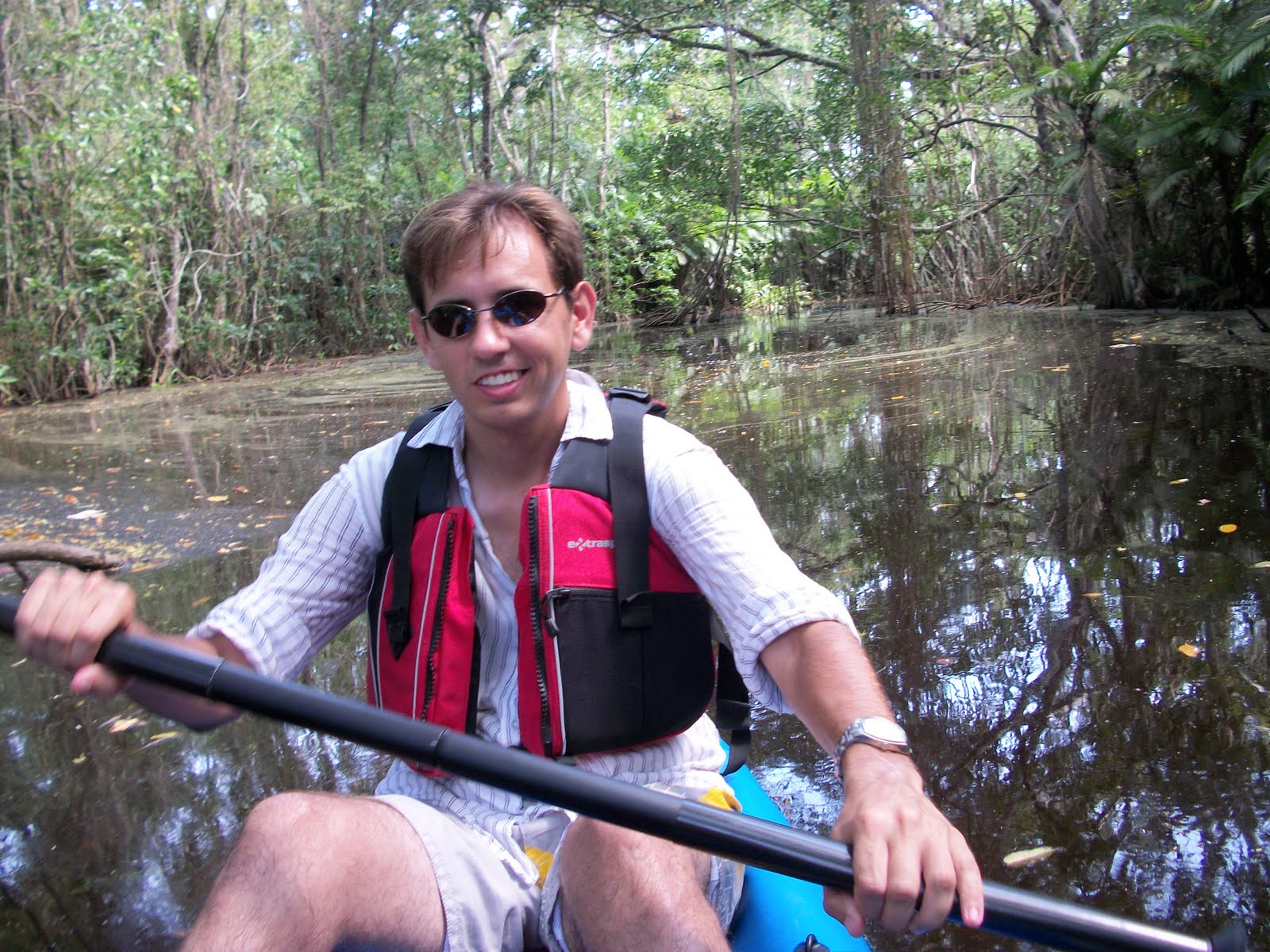
The whole protected area of the park turned out to be traversed by a labyrinth of rivers through mangroves and trees. The driver turned out to also be our guide so we jumped in our kayaks and started exploring. It was quite a long exhausting day paddling up and down the small side streams, but fun learning about the different legends of ghosts (which turned out to be birds), and seeing all the tiny crabs crawling into our kayaks that we kept mistaking for spiders. It was cool and quiet in the secluded inlets, where more than once we thought we were lost for good. The day ended with another Garifuna lunch of tasty seafood soup at a beach shack, but first we stopped to watch a local woman making casabe, a grilled flatbread made out of mashed yuca (or cassava) root. It’s somewhat bland when plain, but very good when sprinkled with garlic salt.

Kayaking the Rio Platano

Getting lost in the tannin colored inlets

Adorable Garifuna girl watching us as we unload our kayaks

On day three we went to the Lancetilla Botanical Gardens, a joint project of USAID, ESNACIFOR (a forestry school in Siguatepeque), and the Honduran national government. More than anything it serves as a recreational park for the residents of Tela and educational area for Honduran school children. There were swimming holes and bike rentals, and even a visitor’s center. We opted to get a guide who took us on a one hour walk through the park, telling us about all the trees and their fruits along the way. We saw a cannonball vine whose fruit are so big and heavy they could be used as cannonballs, a cork tree, a decorative red pineapple plant, a naked Indian which is has a smooth and reddish bark, and a gamba whose big hollow roots can store hundreds of gallons of water. He also plucked things off trees to let us taste like kettle fruit, which had a soft spongy textured flesh around huge seeds and applepears, a red apple shaped fruit with the texture of a pear. All very fascinating tropical plants. Because it was close to town, we opted to go back for lunch and relax the rest of the day in the pool.

Decorative pineapple

Bob and Nolan around the ol' cork tree

Eating an applepear

El tunel de bambu

It was tough to see my parents leave, but it was good to be able to see them, and show them where we’ve been living for the past year and a half, and even to take a vacation to the beach (once in awhile).


Friday, August 5, 2011

Where in the World is...?

Thought we’d give you an update on how our World Map project is going and share some pics.

We finished up drawing all the countries two weeks ago. It took almost two months to get the oceans painted, and lines and countries drawn, which seems like a long time, but we only work with the kids one hour a week and we were out of town a bit in those two months. We did have to correct quite a few errors in the drawing and had to jump in and add a new country when South Sudan separated a month ago, but overall the drawing turned out really well.

We were excited to finally start painting, since now you can really start to see the countries take shape. We anticipated the drawing being the most difficult part, something the kids would have trouble with, but actually the painting might be a little harder. As with the drawing there are excellent artists and well, not-so-excellent ones. Sadly, it seems like kids don’t get much chance to paint things here because their form is quite bad. They like to hold the paintbrushes at the very end where they of course have the least control, then they sort of blot/poke/smash the paint in globs onto the wall or just make big brush strokes back and forth paying no attention to the lines. Neither of these techniques really serves them well in painting very small, intricate, and irregular shapes.

To be sure, some kids are great at it; you just have to learn how to pick out the good ones to do the trickiest stuff. If the kids are really shy and not that excited about painting, then they probably aren’t very good at it. The best ones seem to be those who come forward, even when it’s not their turn and ask to help or steal the paintbrushes from their friends (nicely of course). I have to restrain myself a lot of the time from jumping in and strangling the kids who are taking too much liberty with their paintbrushes, but it’s been good for me, being somewhat of a perfectionist, to give up some control. It’s still hard to watch as the kids aren’t that careful at staying in the lines that others painstakingly drew with such precision, jagged coastlines becoming broad, straight edges before our eyes.

We draw a big crowd of kids every day when we’re painting from all the classes, including the students that Nolan and I teach. We try to get them involved by pointing to countries or bodies of water and asking what they are, and then telling them interesting facts about the country. So far, kids are surprised by how small Honduras is compared to most other countries. They also were amazed by the quantity of islands in the South Pacific and the fact that they were their own countries. Their knowledge of Central America is pretty good, but even South America they are unfamiliar with; and these are 8th graders who might be as old as their late 20’s. It’s an interesting comparison to the group of students in Michigan with whom we exchange letters. When we asked them if they knew where Honduras was, almost all of them wrote back that of course they knew where it was, and they were 5th and 6th graders. It gives us hope that the map project will help not just their art skills, but also their exposure and knowledge of the countries of the world.